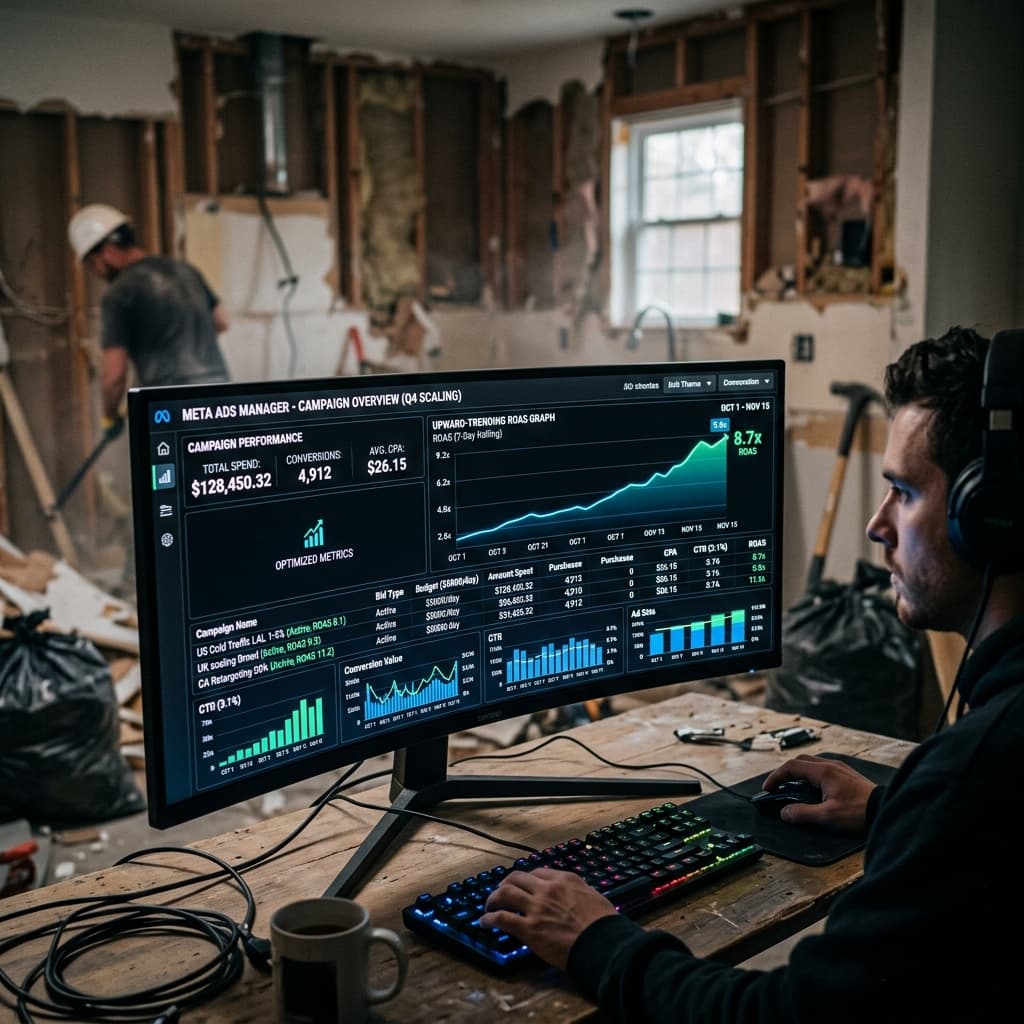
You just lost a $50 million commercial infrastructure bid. Your estimating was flawless. Your logistics plan was watertight. Your safety record is immaculate. You lost because the surety company refused to underwrite your performance bond. Why? Because when their risk analysts executed a deep-web audit on your firm to verify your operational capacity, they found a digital ghost town. Your website looked like it was built in 2004, your Google Business Profile had unverified data, and there was zero indexable proof that your enterprise can handle an eight-figure capital execution. In the eyes of modern risk assessors, if you don't exist algorithmically, you don't exist physically.

The hard truth about scaling a commercial construction firm from $10M to $50M+ in annual revenue is that your growth is entirely bottlenecked by your bonding capacity. You are legally barred from executing public works, large-scale commercial developments, or federal infrastructure projects without a surety bond explicitly backing your performance and payment guarantees.
Most mid-market contractors view bonding capacity purely as an arithmetic calculation: working capital + equity + track record. They send their CPA’s audited financials to a broker and pray for an increase in their single limits. This is a fatal underestimation of how modern institutional underwriting operates. Surety companies are not just looking at your balance sheet; they are underwriting operational risk. And in 2026, operational risk analysts use sophisticated, algorithmic data scraping to verify the reality of your corporate footprint.
Welcome to the invisible battleground of Construction Bonding Capacity SEO. This is not about ranking for "roofing repair near me." This is about engineering your digital architecture to act as cryptographic, unassailable proof of your elite execution capabilities. We are going to break down exactly why underwriting algorithms penalize weak digital footprints, and how your firm can weaponize its SEO to trigger immediate capacity upgrades.
The Underwriting Black Box: How Risk Analysts Actually Audit Your Firm
When your broker requests to bump your bond program from a $15M single limit to a $50M single limit, red sirens go off in the underwriter’s office. You are asking them to bet fifty million dollars on your ability to not default. Financial statements only tell them what happened in the past. To predict the future, they conduct a severe reputational and operational audit.
Ten years ago, they might have called a few references. Today, algorithms do the heavy lifting before a human underwriter even looks at your file. Here is the reality check: risk analysts treat inconsistencies in your digital data as fraud indicators.
The "Ghost Entity" Rejection Protocol
If an underwriter runs a search for your company and finds that your business name is listed as "Apex Builders LLC" on your incorporation documents, but your Google Business Profile says "Apex Remodeling," and your website (which lacks an SSL certificate) hasn't published a project update since 2019, the algorithm flags your entity as highly volatile. This fragmentation suggests a profound lack of administrative control. If you cannot manage a basic digital asset, the underwriter assumes you lack the rigid administrative discipline required to manage a $50M general contracting operation. They will cap your bonds aggressively to protect their own exposure.
Your digital footprint must be a flawless fortress of verified capability. Every piece of public-facing data must perfectly align to create an irrefutable narrative of scale, competence, and liquidity. SEO, in this context, is not about finding new clients; it is about controlling the narrative presented to the gatekeepers of your capital.

Data Indexing: Building the SEO Paper Trail of Scale
When a surety firm evaluates your application for a massive infrastructure bond, they demand proof of prior execution. It is human nature (and algorithmic protocol) to trust third-party verification over your own self-reported marketing brochure. They will execute targeted semantic searches against your brand name alongside keywords like "litigation," "delay," "OSHA violation," and "completed project."
If your SEO strategy is nonexistent, those search results will be dominated by random sub-contractor directory listings, or worse, a single negative review from a disgruntled ex-employee from four years ago. You must forcibly inject overwhelming positive proof of your scale into Google’s index.
The 8-Figure Case Study Injection
Elite constructors don't just "post pictures" of a finished building. They publish highly technical, 2000-word case studies structured with strict schema markup (JSON-LD for Article and CreativeWork). These documents meticulously detail the project scope, the exact logistics of the material supply chain, the timeline compression strategies used, and the budget adherence. When Google indexes these case studies, they become permanent, algorithmic proof of your execution capability. When the underwriter searches your firm, they are hit with a wall of verifiable, hyper-detailed success data.
The Physics of Local Citations and NAP Consistency
We mentioned the "Ghost Entity" rejection. The technical solution to this is rigid NAP (Name, Address, Phone) consistency deployed across the entire local search ecosystem. Risk algorithms cross-reference government databases (like the CSLB in California or the DOT) with commercial databases (Dun & Bradstreet, Google Business, Yelp, Bing Places, and industry-specific aggregators like Blue Book).
Every single character of your data must be identical. If the state license board lists you at "Suite 200" but your Google Business Profile says "Ste. 200", the algorithms read this as two distinct, potentially conflicting entities. It seems incredibly pedantic, but this fragmentation degrades your digital authority score. An underwriter looking at your D&B report will see the low trust score generated by these mismatches and subconsciously associate your firm with instability. Fixing your local citations is not about getting more phone calls; it's about bulletproofing your corporate identity across all institutional databases.

The Authority Backlink: Referencing Corporate Power
Underwriters look for institutional validity. Anyone can buy a domain name and claim they build skyscrapers. What separates a legitimate $50M enterprise from a highly-leveraged imposter is their network of digital associations. In SEO architecture, these are known as backlinks. But for bonding capacity, we are talking about highly specific, hyper-authoritative links.
If your corporate website receives inbound links from the municipal city planning office, the state department of transportation, major architectural firms, and recognized real estate investment trusts (REITs), the search algorithm registers this as massive trust. When the surety risk software crawls the web, it sees that the most powerful entities in your geographic radius are digitally vouching for your existence.
Every time you complete a project, mandate digital PR. If you build a $20M clinic, ensure the hospital's press release links back to your exact domain. If you sponsor a local engineering university program, require an official `.edu` backlink to your careers page. This creates a web of unassailable corporate authority that instantly bypasses the initial friction of risk assessment.
Leveraging the Google Business Profile as Cryptographic Proof
We've discussed this before, but it bears repeating in the context of financial underwriting: your Google Business Profile (GBP) is the ultimate cryptographic proof of your physical operations. It is not a tool to get people to call your receptionist. It is the anchor point of your entire digital existence.
When a surety analyst pulls up your firm, your GBP takes up the entire right side of their monitor. What do they see? If they see a grainy, unverified photo of a warehouse door uploaded in 2018, they instantly apply an invisible tax to your bonding application.
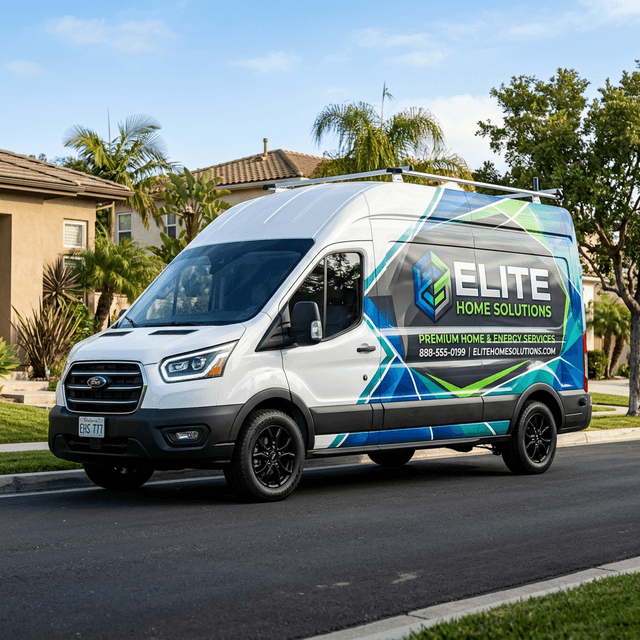
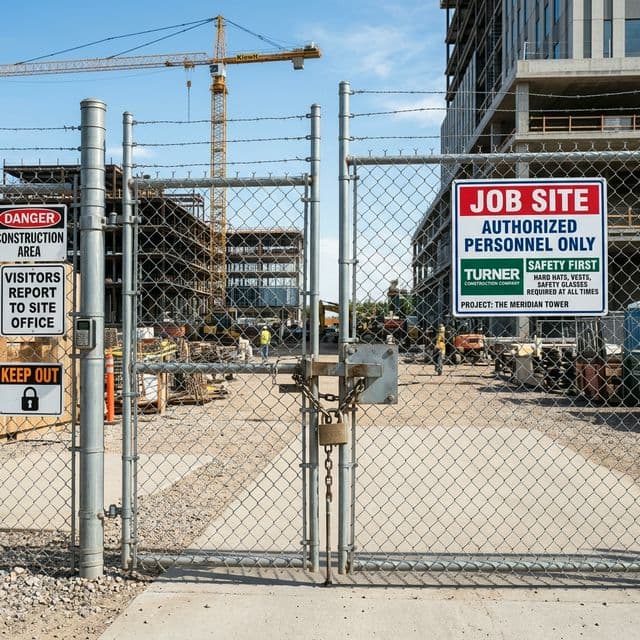
- Executive Action: Your GBP needs to feature professional, high-resolution photography of your fleet, your C-suite executives, and active job sites with your logo clearly visible on cranes and signage.
- Review Semantics: It must be flooded with keyword-rich reviews from commercial clients (e.g., "Apex Builders successfully delivered our $15M structural steel phase on time despite supply chain issues."). These are not for marketing—they are for the underwriter reading your file.
- Constant Velocity: Utilize the GBP "Updates" feature to continuously post milestones of your massive projects. Show the algorithm (and the analyst) that your firm is highly active, liquid, and relentlessly executing.
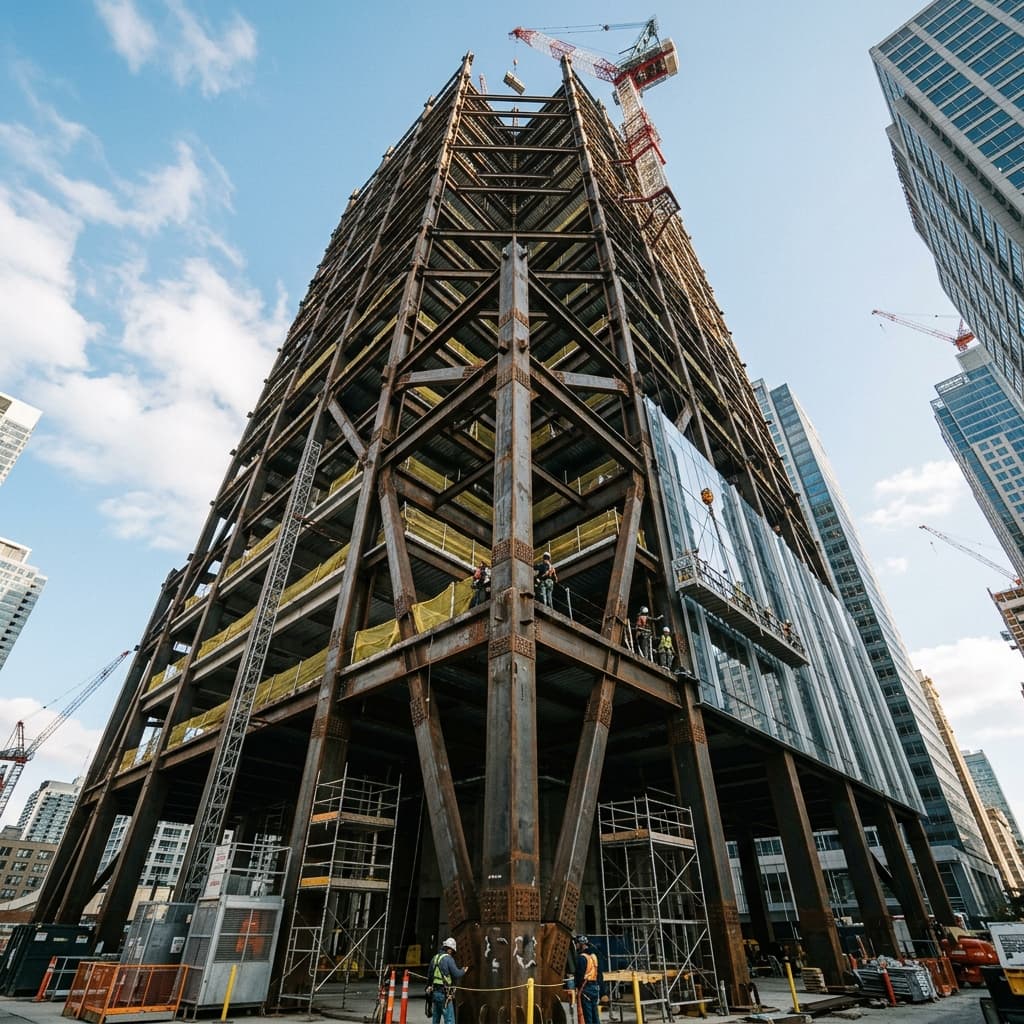
Eliminate the Digital Bottleneck to Your Growth
Stop treating your SEO as an afterthought handled by a random marketing intern. Your digital infrastructure is the direct interface between your company and the institutional gatekeepers holding your $50M bonding approval. If you present a fractured, unsecure, invisible data profile, you will be rejected, or severely limited, entirely based on algorithmic risk aversion.
To expand your bonding capacity, you must construct an unassailable digital narrative. You must deploy robust site architecture, hyper-consistent local citations, authoritative semantic indexing, and a Google Business Profile that bleeds competence. Make your operational reality impossible for the underwriting software to deny.

Engineer Institutional Trust
Stop losing $50M bids because your digital footprint looks like a liability. Lemonade Ideas architects impregnable, authoritative SEO frameworks designed specifically to provide the algorithmic proof demanded by aggressive commercial underwriting and institutional clients.
Deploy Elite SEO ArchitectureYou may also find valuable

Prevailing Wage Marketing: Winning Highly-Lucrative Municipal Construction Contracts
March 18, 2026
Government Contract Bids: Digital Compliance Hubs
March 17, 2026
Capability Statements CA: The Blueprint for Winning High-Value Public Works Contracts
March 16, 2026