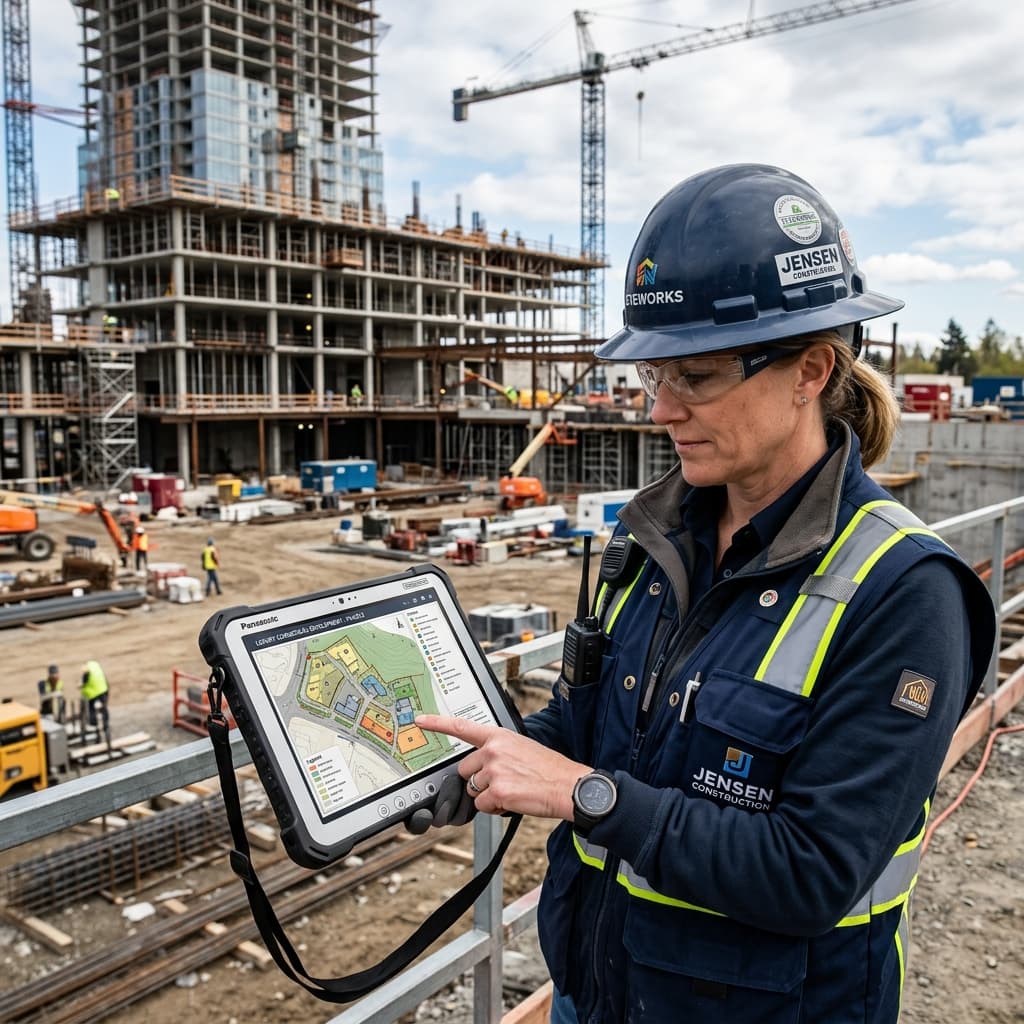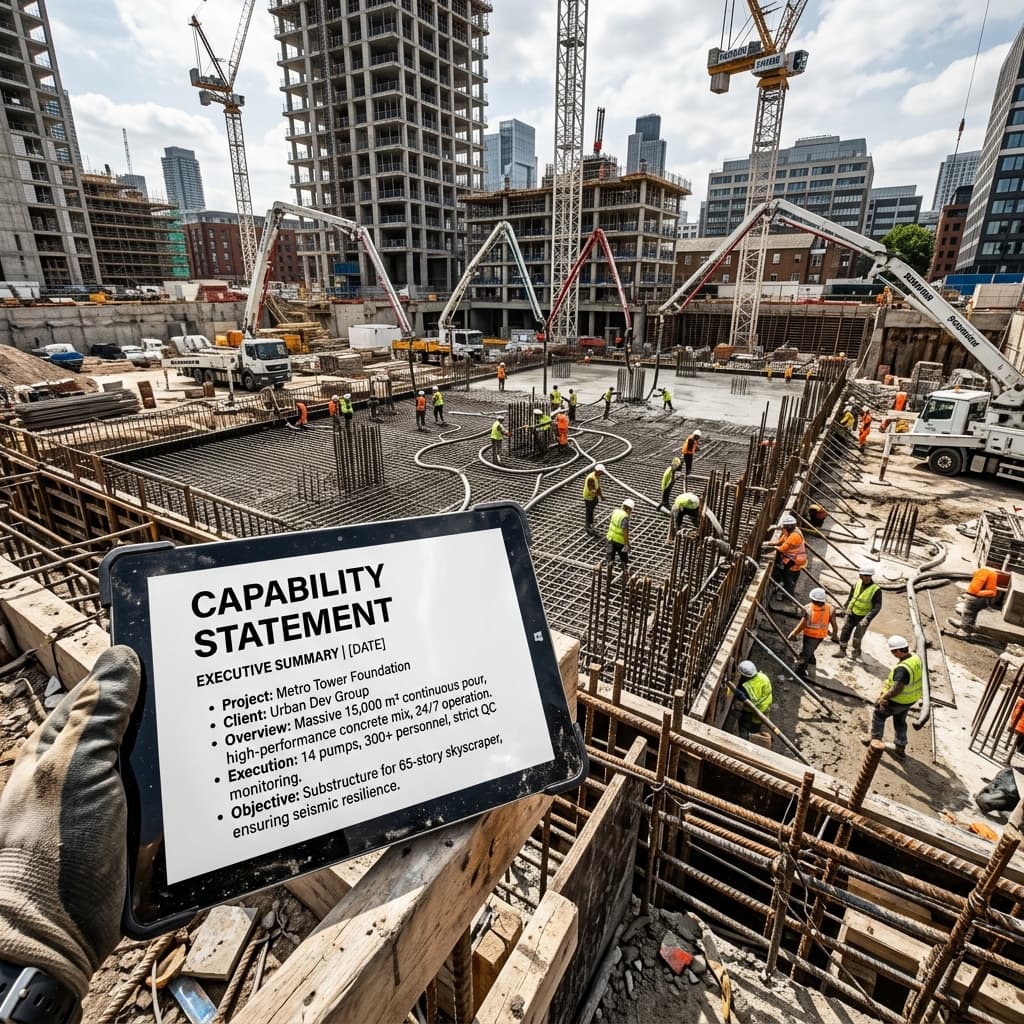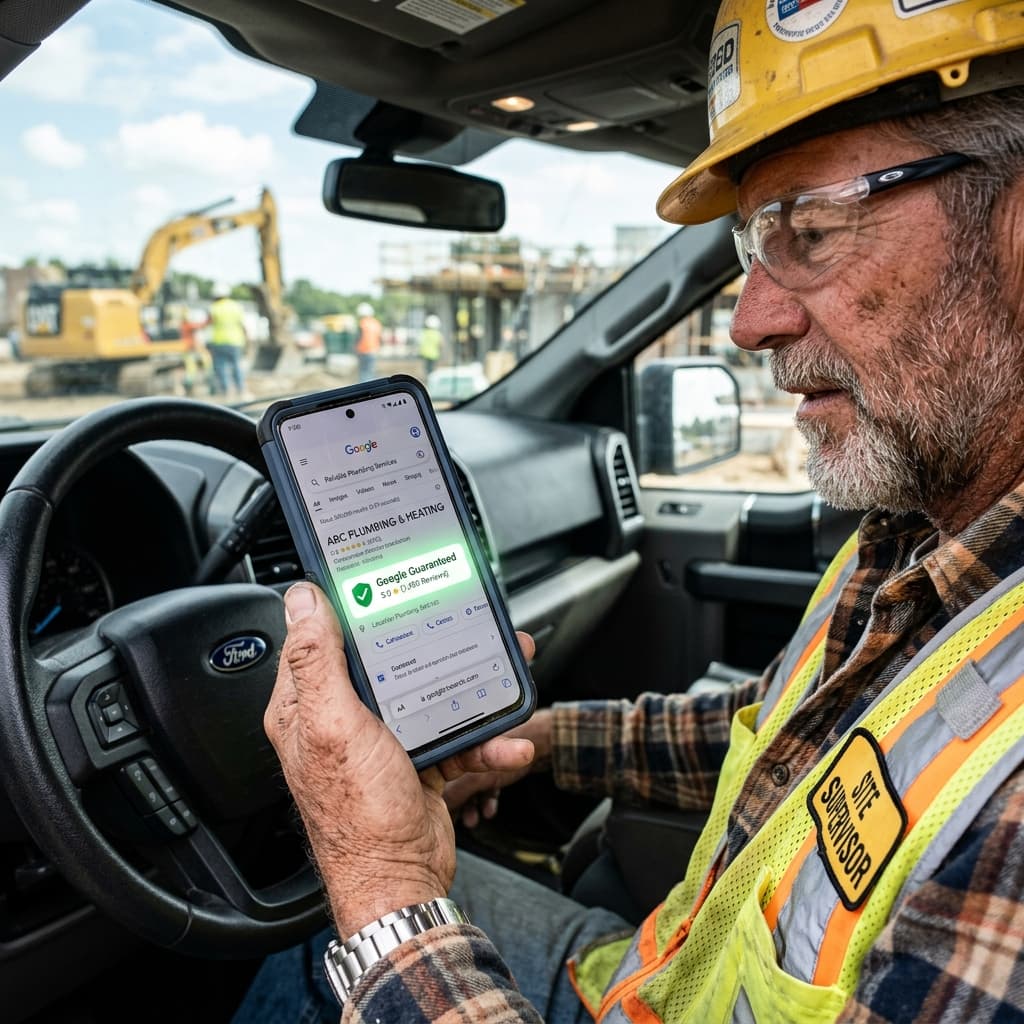
High-net-worth developers do not sit at desktop computers to research builders. They are in transit — in the back of luxury town cars, walking active jobsites in steel boots, or scanning proposals in airport lounges. If your website breaks on an iPhone 15 Pro, you are instantly disqualified from elite commercial contracts. A mobile-first architecture is no longer a marketing tactic; it is the ultimate psychological proof of operational excellence.

The Brutal Reality of Elite Decision Makers
Let's address a mathematical certainty that 90% of general contractors refuse to acknowledge: commercial developers, architects, and high-net-worth custom home buyers do not sit at oak desks to research your company. The device validating your multi-million dollar capability is a 6-inch pane of glass. Google's own data confirms that over 68% of all B2B research begins on a mobile device. In the commercial construction vertical specifically, mobile traffic to contractor websites has surged past 72% as of Q1 2026.
A "mobile-friendly" website is an archaic, decade-old concept. It implies your desktop site shrinks down reluctantly, crushing carefully designed layouts into unreadable columns, overlapping navigation elements, and images that bleed off-screen. Elite contracting firms orchestrate a Mobile-First Architecture — a fundamentally different engineering philosophy where the digital experience is specifically designed from the ground up to aggressively target mobile viewport behavior, exploiting thumb-reach zones, high-contrast typography, and instantaneous load times over standard 5G connections.
The distinction between "mobile-friendly" and "mobile-first" is not semantic — it is architectural. A mobile-friendly site is a desktop site that has been retrofitted to not break on smaller screens. A mobile-first site is an experience that was born on a 390px viewport and then progressively enhanced for larger screens. The engineering priorities are completely inverted: performance, touch interaction, and thumb-zone accessibility are the foundational constraints, not afterthoughts.
The 3-Second Disqualification Protocol
If a developer taps your link on an iPhone and has to pinch-to-zoom to read your capabilities statement, you haven't just lost their patience — you have mathematically proven that your operational standards are fundamentally inferior. Google's Core Web Vitals data shows that 53% of mobile users abandon a site that takes longer than 3 seconds to load. In commercial construction, where a single lost visitor could represent a $15M contract opportunity, every millisecond of load time is a revenue risk.

Anatomy of a 7-Figure Mobile Moat
What separates a generic contractor template from a high-ticket closing engine? It comes down to friction. The psychology of luxury B2B purchasing dictates that operational competence is judged by digital competence. When a prospective client interacts with your mobile site, their subconscious is mapping your UX friction directly to how you will manage their $10M jobsite. A clunky mobile experience communicates clunky project management. A flawless mobile experience communicates institutional precision.
- Thumb-Zone Action Hierarchy: The "Get an Estimate" or "Submit RFP" buttons cannot be hidden inside a hamburger menu. Elite sites utilize persistent, sticky bottom CTA bars positioned within the natural thumb-reach zone. The user's thumb should always rest less than 2 millimeters away from the primary conversion action. Studies in mobile UX demonstrate that bottom-positioned CTAs receive 22% higher tap rates than top-positioned ones.
- Brutalist Typography Scaling: Desktop paragraphs are unreadable walls of text on mobile. High-converting mobile sites slash paragraph lengths by 40%, inject massive bold headers using modern sans-serif fonts at high rem values (16px base minimum), and ensure zero ocular strain under harsh sunlight on active jobsites. Line height must be set to at least 1.6x to prevent text from feeling cramped on small viewports.
- Media Facade Loading: You must showcase your highest-quality 4K drone footage and project photography. However, rendering a 20MB video on a 4G connection is digital suicide. Mobile-first engineering intercepts this by utilizing WebP image facades — lightweight compressed preview images that trigger full video playback only upon explicit user intent (tap), preserving initial load performance while maintaining visual impact.
- Input Type Optimization: Contact forms must use proper HTML5 input types — `type="tel"` for phone fields triggering the numeric keypad, `type="email"` for email fields triggering the @ keyboard, and `inputmode="numeric"` for budget fields. This single engineering detail eliminates the microscopic friction that causes millions in abandoned RFP submissions annually across the construction industry.
Core Web Vitals: The Technical Foundation
Google's Core Web Vitals are the three measurable performance metrics that determine your mobile ranking: LCP (Largest Contentful Paint) must be under 2.5 seconds, FID (First Input Delay) must be under 100ms, and CLS (Cumulative Layout Shift) must be under 0.1. Sites failing these thresholds are algorithmically suppressed in mobile search results — meaning your competitors who pass these tests appear above you for every "commercial builder near me" search.
The Autopsy of a Failed "Responsive" Site
Most construction companies hire an agency who designs a beautiful desktop website, then clicks a button in WordPress or Squarespace to "auto-scale" it for mobile. This is catastrophic. The elements simply crush together like a structural collapse. Margins disappear. Text crawls over background images rendering it completely illegible. Navigation elements overlap. Hero sections that looked cinematic on a 27-inch monitor become a confused jumble of text and imagery on a 6.1-inch phone screen.
Worse yet, the contact forms remain engineered for desktop keyboards. When a user tries to type their phone number, the standard alphanumeric keyboard appears instead of the digital numpad. When they try to enter their email, the keyboard doesn't auto-suggest the @ symbol or .com domain. These are single lines of missing HTML code that create microscopic friction. Individually, each friction point seems trivial. Collectively, over a year of mobile traffic, this invisible friction costs you millions in abandoned RFP submissions from developers who silently moved to the next contractor in their browser tab.
The image optimization problem is equally devastating. Desktop-resolution images (2000px+ wide, 2-5MB each) that look stunning on a Retina display become performance anchors on mobile connections. A homepage with 6 unoptimized images can take 15-20 seconds to fully render on a standard 4G connection. By that time, the developer has already closed your tab and is reviewing your competitor's site, which loaded in 1.8 seconds because they invested in WebP compression, responsive image srcsets, and lazy loading — the fundamental building blocks of mobile-first engineering that most template-based construction sites completely ignore.

Mobile Speed is Operational Proof
When a $15M commercial expansion project is up for grabs, the bid winner is rarely the cheapest contractor. It is the firm that exudes complete structural competence across every touchpoint. A flawlessly engineered mobile experience communicates, without a single word spoken: "We command the details, we eliminate friction, and our infrastructure is modern." This psychological transfer of competence from your digital presence to your perceived construction capability is automatic, subconscious, and extraordinarily powerful.
Refuse to let your competitors out-engineer your digital presence. Terminate amateur "responsive" templates that were never designed for the construction vertical. Deploy an aggressive mobile-first architecture built on performance-first engineering principles: sub-2-second load times, thumb-zone-optimized interaction design, progressive image loading, and conversion-focused form engineering. The firms that dominate mobile performance today will dominate the commercial search landscape for years to come because Google's algorithm increasingly rewards mobile experience quality as the primary ranking signal.

Stop Bleeding Mobile Leads
If your website hasn't been coded strictly for elite mobile performance, you are losing 8-figure bids to competitors with sharper digital infrastructure. Lemonade Ideas engineers mobile-first architectures for elite California contractors.
Audit My Mobile ArchitectureYou may also find valuable

Fast Loading Sites: Why Wealthy B2B Developers Instantly Terminate Slow Contractors
March 16, 2026
Website Trust Badges: The Silent Persuasion Tools That Win Multi-Million Dollar Capital Bids
April 8, 2026
Blueprint Web Design: Why a $50M Construction Firm Cannot Survive on a $500 Website
April 9, 2026