Elite commercial builders are hemorrhaging high-ticket bids not due to poor logistics or uncompetitive pricing, but because of catastrophic, invisible UI design flaws. Every day, institutional developers arrive at your website, attempt to request a bid, encounter friction, and abandon the process without a trace. Guessing where your users click is an amateur liability. Heatmap tracking is a highly classified intelligence extraction protocol that visually identifies exact friction points, transforming arbitrary web design into a rigorously engineered conversion funnel. If you aren't tracking behavior, you are driving a multi-million-dollar vehicle completely blind.
The Devastation of Blind Navigation
Imagine overseeing the construction of a massive, multi-million dollar high-rise commercial center. The foundation is poured perfectly. The structural steel meets absolute maximum specifications. The electrical pathways and ducting are perfectly hidden within the massive superstructure. Now, imagine opening the doors to a VIP group of institutional investors and physically removing all the lighting, exit signs, and hallway directions. You plunge them into absolute darkness and expect them to naturally navigate to the executive penthouse to sign the final contracts. This is precisely what you are doing when you operate a high-caliber commercial construction firm's website without heatmap tracking technology. You have constructed an incredible digital foundation, showcasing brilliant architectural portfolios and multi-million dollar capability statements, but you have fundamentally abandoned the user the second they step foot onto the property.
Heatmap tracking contractors understand that "hoping" a developer finds your contact page is an amateur, catastrophic liability. You cannot hope they scroll past your massive hero image. You cannot hope they see a tiny, unstyled "Submit" button tucked away in the footer of the "About Us" page. In an industry where a single captured lead—a single bid requested by a regional director of healthcare real estate or an enterprise logistics developer—can inject $50,000,000 into your project pipeline, leaving user behavior to chance is a dereliction of executive duty. Tracking is not an optional marketing add-on; it is an absolute requirement for elite operational efficiency.
The Myth of the "Intuitive" Design
Countless construction CEOs fall into the psychological trap of "Intuitive Design." Because they built the website, they believe every button, every menu, and every capability statement is perfectly obvious. They know exactly where to click. But when a stressed, time-poor commercial developer from a different state attempts to navigate that same interface, they experience immediate cognitive overload. They cannot find your bonding limits, they cannot locate your past municipal projects, and instead of taking five minutes to figure it out, they instantly close the tab and award the bid to your most aggressive competitor. Without heatmap intelligence, you will never even know they were there.
The ROI of Click-Tracking Intelligence
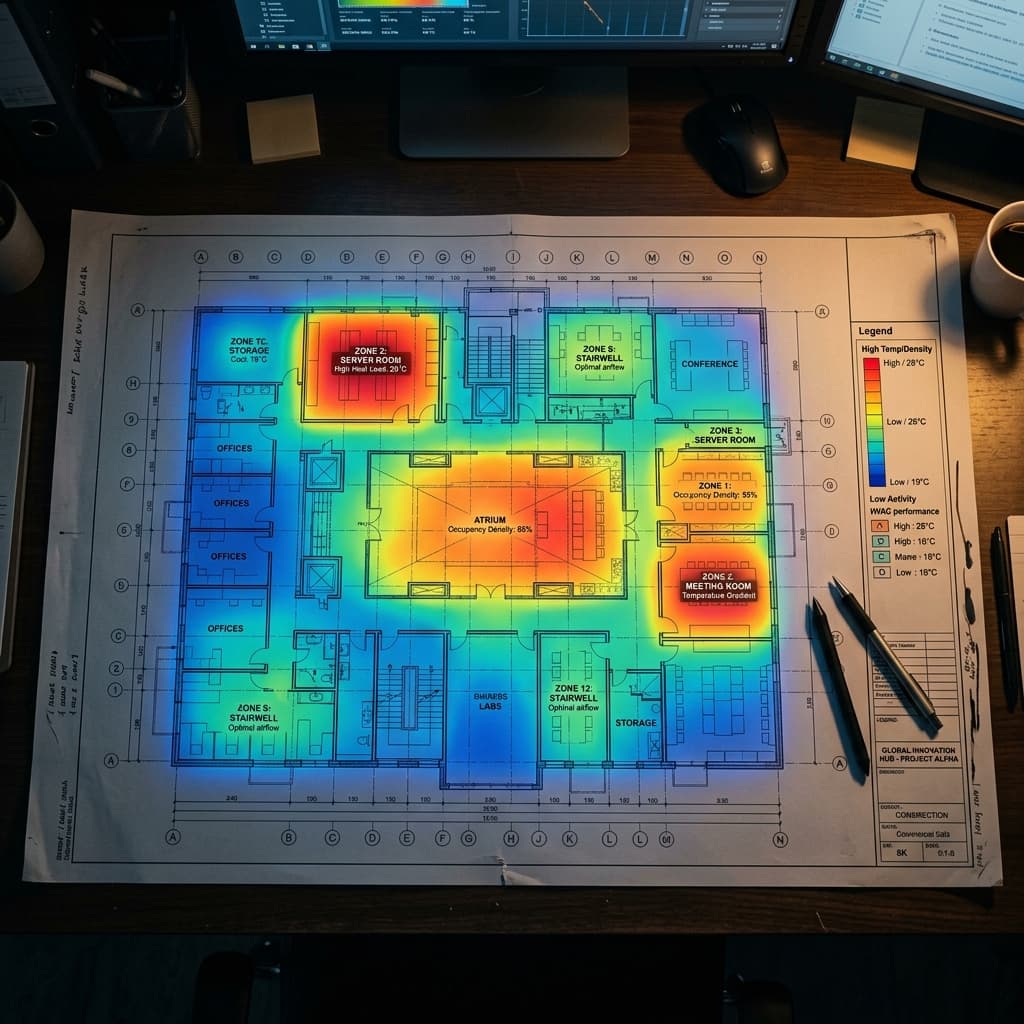
What exactly is heatmapping? It is the military-grade deployment of data visualization over your existing digital infrastructure. Every time a user enters your website, advanced background scripts track the precise pixel coordinates of their mouse movements, their exact scrolling depth, and their physical click interactions. This raw telemetry is processed and overlaid onto a screenshot of your website, rendering intense literal "heat" markers (glowing red and yellow) over areas receiving the most intense engagement, and icy blue zones indicating total user abandonment.
When a Tier-1 firm implements heatmap tracking contractors are suddenly granted X-ray vision into the minds of their enterprise clients. They stop arguing internally about what color the "Request a Proposal" button should be or where to place the newest drone video of a commercial tilt-up. The data dictates reality. If a heatmap reveals that 85% of institutional visitors are violently clicking on an image of a hospital you built, believing it to be a link that leads to a detailed case study, but the image is unlinked and dead—that is a catastrophic friction point. You have just identified a critical pipeline leak. By simply linking that graphic to the dedicated hospital case study, you instantly remove a barrier, pushing the developer deeper into your conversion funnel and infinitely closer to signing a binding Letter of Intent.
The difference between the firms pulling down multi-million dollar municipal contracts and the ones fighting for local strip-mall renovations often comes down to this exact microscopic attention to digital detail. It is a game of millimeters. Elite builders eliminate every possible excuse an investor might have for not initiating contact. Heatmap data strips away opinions and egos. It replaces the classic boardroom guessing game with raw, undeniable statistical fact.

Scroll Depth Analysis: Confronting The Fold
One of the most brutal realities exposed by heatmap tracking contractors is the "False Bottom" or the dreaded drop-off at the digital fold. When you commission a beautiful, expensive, custom-coded web experience, you naturally assume that investors will scroll all the way down to read every meticulously crafted paragraph regarding your safety records, your union affiliations, and your 30-year history. Scroll heatmaps provide a deeply sobering awakening to this delusion.
It is statistically common for scroll depth analytics to reveal that 40% to 60% of C-suite executives landing on your primary 'Commercial Services' page never scroll past the initial viewport (the "fold"). They land, they quickly scan the hero headline, and if they do not see an immediate, compelling reason to investigate further, they vanish. If your primary lead capture form—the intricate, heavily optimized gateway to requesting a structural bid—is buried at the very bottom of the page in the footer, it is effectively invisible to over half of your potential enterprise traffic. You are paying thousands of dollars in high-end B2B advertising campaigns only to artificially hide the absolute most critical component of the transaction.
By leveraging precise scroll data, elite web architects immediately restructure the visual hierarchy. If the heatmap indicates that user attention is plunging into a dark blue abyss after the third paragraph, we do not simply cross our fingers. We aggressively reposition critical trust markers—such as your ENR top 400 ranking badge, your multi-million dollar bonding capacity proof, and an aggressive, high-contrast CTA button—above the drop-off line. We force the investor to confront your authority and your call to action before they even have the opportunity to lose interest. This isn't just web design; this is psychological engineering, utilizing granular analytics to systematically manufacture pipeline velocity.
The 3-Second Window
You have exactly three seconds to convince an institutional developer that your firm possesses the scale, bandwidth, and financial stability to handle their complex infrastructure requirement. If your primary selling proposition and contact node are buried below the fold, you surrender perfectly good bids. Heatmap tracking forces you to operate entirely within the harsh realities of executive attention spans.
Rage Clicks: Identifying Catastrophic Form Friction
In behavioral analytics, a "Rage Click" is precisely what it sounds like. It occurs when a user rapidly and repeatedly clicks on a specific element of your website out of intense frustration because the element is not responding exactly as they expect. For a commercial construction firm, discovering a density of rage clicks on your "Request a Bid" form is the digital equivalent of discovering a massive structural crack in a load-bearing column. It is an immediate, five-alarm emergency.
Imagine a scenario where an enterprise developer has finally decided to reach out to your firm for a $30M logistics center build. They fill out their name, their company, and their project scope. They click the "Submit" button. Nothing happens. They click it again, slightly harder. Nothing happens. They click it five times in rapid succession, experiencing a surge of cortisol and anger. Heatmap tracking logs this incident permanently. It provides raw, unfiltered video playback of the developer's cursor movements and their eventual, furious exit from the website. Without this technology, your marketing director simply assumes the traffic was "low quality." With this technology, you realize that a minor javascript error or an obscure CAPTCHA validation strictly cost your firm a multi-million-dollar opportunity.
By capturing friction points in real-time, heatmap tracking contractors can audit and dismantle frustrating UI elements before they metastasize. If users are constantly backing out of a form because you require them to manually type out their entire corporate address rather than providing a dynamic autocomplete field, the heatmaps will brutally highlight that abandonment point. Elite web development is about entirely lubricating the conversion funnel, ensuring the path from initial interest to contract submission is utterly devoid of resistance.

The Mobile Executive: Tracking The On-The-Go Investor
Commercial construction is not a desk-bound industry. The developers, investors, and public works directors who authorize eight-figure checks do not spend their days sitting casually in front of 32-inch monitors. They are on job sites, in transit, and operating off mobile devices. Therefore, desktop heatmap data is only half the equation. The mobile experience is notoriously volatile, and mobile heatmap tracking exposes a completely different hierarchy of pipeline leaks.
On a smartphone, screen real estate is at a premium. Users do not precisely click with a mouse; they tap with their thumbs. Heatmap tracking reveals "Touch Heatmaps" detailing exactly where thumbs are missing critical buttons by mere millimeters. If your primary navigation menu requires the manual dexterity of a surgeon to expand, executives will simply bounce. If your mobile layout forces them to pinch and zoom to read details about your concrete pouring capacity, their immediate subconscious assessment is that your firm is antiquated.
Mobile heatmaps expose the "dead zones" of the phone screen—areas that are physically uncomfortable for a one-handed user to reach. Elite heatmap tracking contractors use this data to aggressively redesign mobile interfaces. They shift massive "Call Now" buttons to the bottom right corner of the screen, perfectly aligning with the natural arc of the user's thumb. They ensure every single interactive element has a massive hit-box. They guarantee that the mobile experience is not just technically responsive, but behaviorally weaponized to capture leads from extremely busy executives in real-time environments.
Conversion Rate Optimization (CRO): The Ultimate Discipline
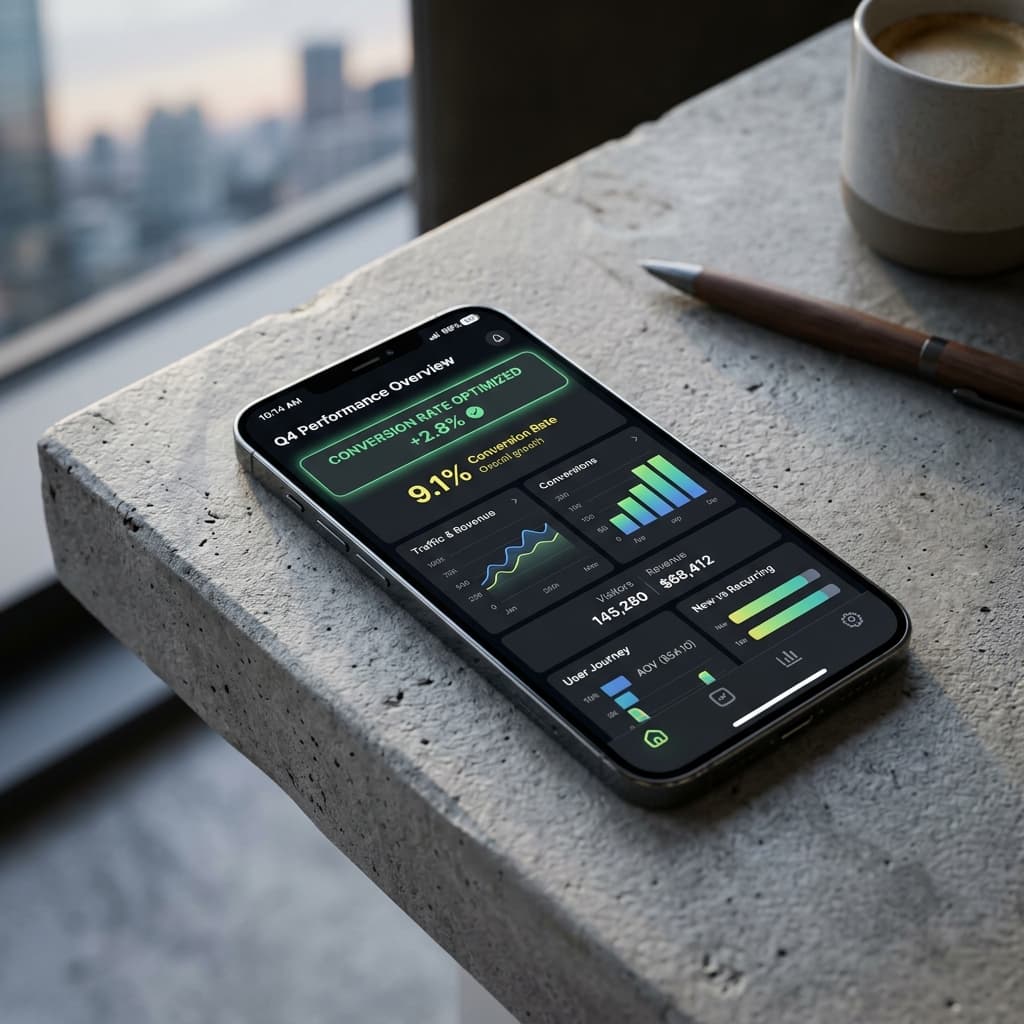
Heatmap tracking is not merely about observing failure; it is the foundational requirement for Conversion Rate Optimization (CRO). Once an elite firm identifies a leak via heatmap tracking, they formulate a hypothesis to fix it. They then deploy dual versions of the website utilizing sophisticated A/B testing protocols, injecting 50% of the traffic to the original design and 50% to the newly engineered layout.
If the heatmap proves that changing an ambiguously worded "Contact" button to a highly authoritative, aggressive "Request Engineering Bid" button increases total interactions by 35%, that single, data-driven adjustment can literally be worth millions of dollars in net-new pipeline over a 12-month period. This is the difference between treating a website as an expense and treating it as an apex sales asset.
Ultimately, heatmap tracking removes the emotional attachment from marketing and centers the entire operation on empirical performance. It defines the "Lemonade Standard." When Lemonade Ideas architects a digital headquarters for an elite commercial contractor, we do not guess. We deploy advanced tracking infrastructure directly out of the box. We monitor the first 500 interactions, analyze the heat zones, document the rage clicks, and iterate the design in a continuous loop of aggressive optimization. By the time your next $50M developer lands on the site, the interface has been weaponized specifically for their conversion.

Stop Guessing. Start Tracking.
Abandon amateur guesswork. Lemonade Ideas installs military-grade behavioral heatmaps to pinpoint exact pipeline leaks, ensuring your commercial construction website acts as an irreproachable conversion machine for high-net-worth developers.
Deploy Heatmap AnalyticsYou may also find valuable

Fast Loading Sites: Why Wealthy B2B Developers Instantly Terminate Slow Contractors
March 16, 2026
Lead Capture Forms: Stop Accepting Garbage Into Your Commercial Pipeline
April 9, 2026
Construction Lead Magnets: Why 8-Figure Investors Laugh At Your "Newsletter"
April 9, 2026